
The Scale Shows Your Weight. It Doesn't Show What You Are Weighing
For oh so many people, stepping onto scales is a love / hate relationship. Should the number drop - life is good, should they rise - the need to blame something takes over.
Here's the problem, why cheer or complain when you do not have the full facts?
When on a traditional scale - your weight is everything - muscle, bone, organs, fluid, and fat, all combined into one figure.
When that figure rises, the question you should ask yourself is what has increased? The reality - scales can never offer an answer. The fact is, people often immediately assume the increase is fat, and in turn assume they have ruined their efforts.
Should your weight remain stable - the assumption is nothing has changed. Again, there is no means to prove this, you may have dropped a little fat and retained the same weight in water or fat.
Here's what the scale can't tell you. Two people can both "gain 2kg" and be in completely different situations. One added 2kg of fat. The other added 2kg of muscle (which is no easy or overnight task) while losing fat at the same time - an excellent result (called lean gains) that the scale shows as identical results. The number is the same. The outcome is the opposite.
This is where scales which reveal body fat percentage are essential. Scales that offer body fat (and lean body mass readings) should offer metal contact points to stand on, and grip. These use a method called bioelectrical impedance.
A small current passes through your body, and resistance to that current estimates your fat versus lean tissue. They're not the most accurate (compared to a DXA scan) as readings can swing 3-5 points depending on hydration.
But used consistently, at the same time of day (after using the loo if possible) and they offer "insight" and a trend of results.
From these results you are able to make changes to your eating habits, exercise, activity, and sleep habits.
Once you know your body fat percentage and your lean mass, the picture changes. If your weight goes up but body fat percentage holds steady or drops, that weight increase is likely muscle, water, or food weight and waste.
If your weight stays exactly the same but body fat percentage climbs, you're losing lean mass while gaining fat - this signals to you that more changes are required. Nothing drastic, no 1000 or less calorie diets. Just focused, realistic changes to bring your results and long term goals under control.
Challenge - this week, get a body fat reading using the same conditions each time - same scale, same time of day, ideally first thing after the loo.
Record your weight and your body fat percentage together, not weight alone. Repeat this weekly to show natural and expected shifts in results. Fluctuations should be expected (a few % either way is the norm). Compare results and average these each week.
To help you more - add your results to my BF/LM calculator and update it weekly to note how you are progressing.
Body Fat / Lean Mass Tracker
Log your weight and body fat %. We'll work out your lean body mass and track the trend so you can see what's really changing.
Log your results weekly for 4 weeks to see your average.
Loading...
Save and track your results over time
Create a free account to log your weight and body fat weekly, see your trend and spot what's really changing.
If you want help understanding what your numbers actually mean for you, tell me about your situation. There are no wrong answers.
Related Quick Wins

20 Minutes. Which Activity Wins?
You don't have time. That's the assumption. So let's work with 20 minutes and see which activity actually wins.
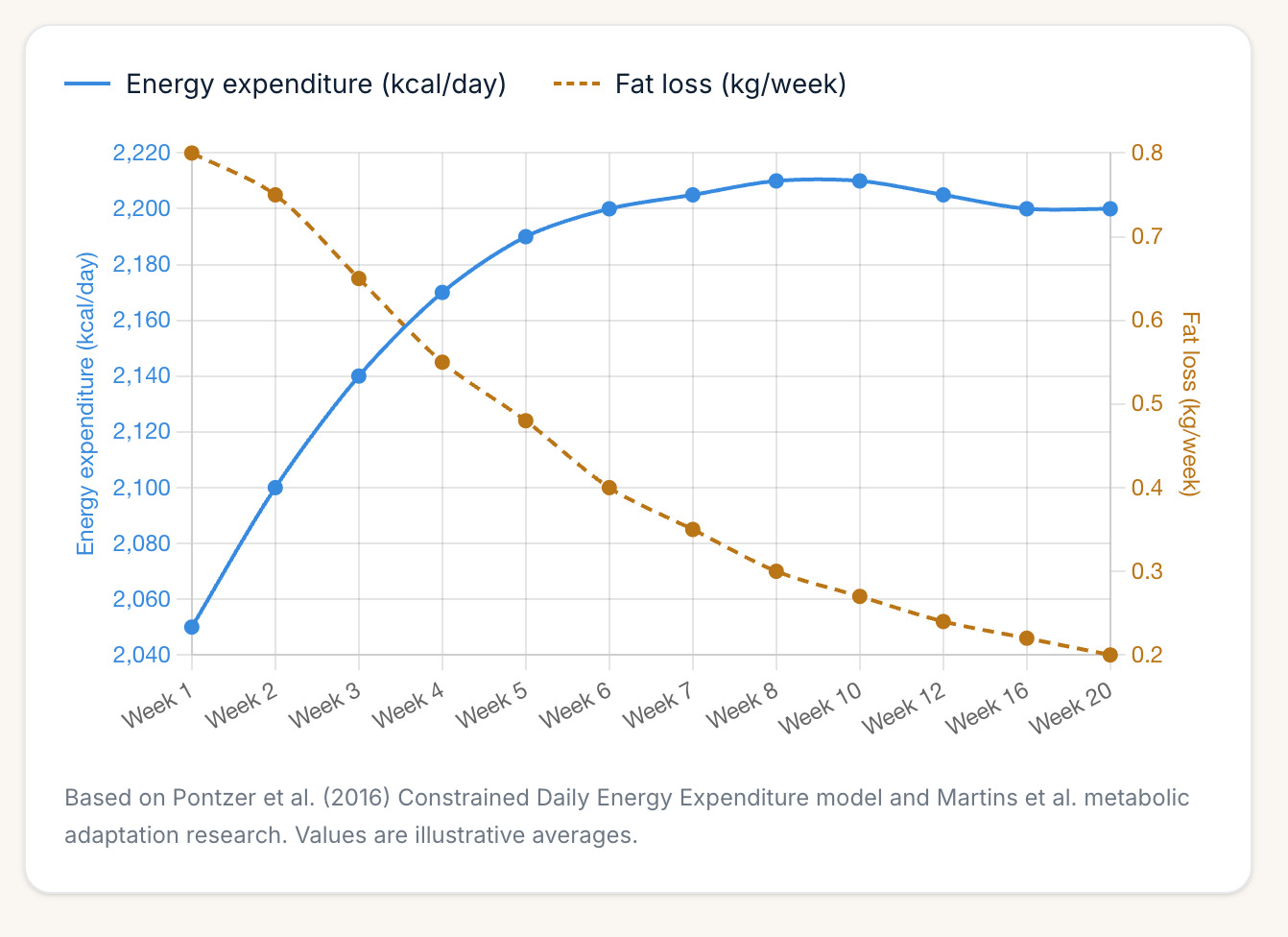
The Metabolism Myth Nobody Talks About
You start exercising. The weight drops. Then nothing. Here's why -- and why it's not your fault.
Want more than a Quick Win? Let's work together.
Let's Chat